
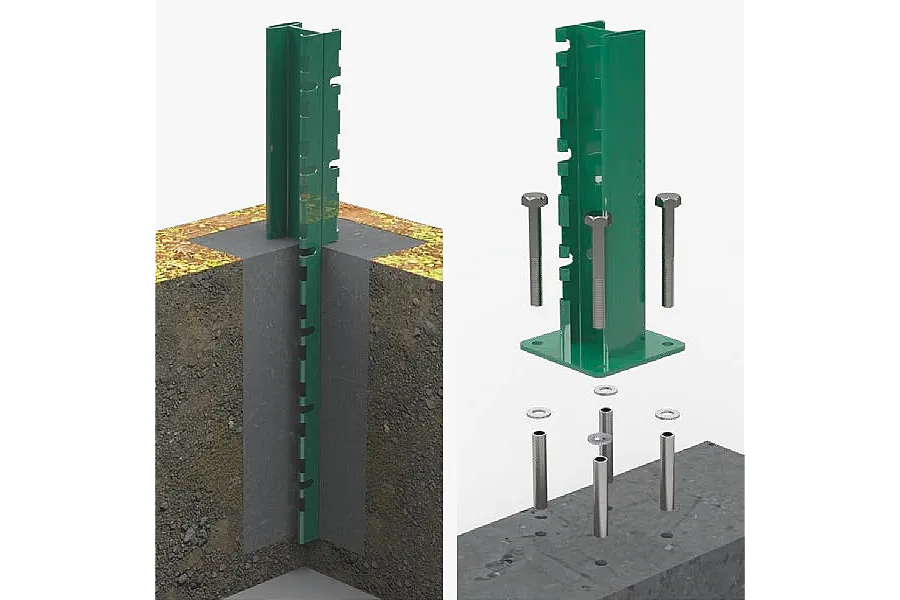
Production note: We manufacture French posts in-house at Dekorafence. For the best result, the post plan should be evaluated together with the panel dimensions and the installation line.
An organized appearance, a controlled connection line, and a measurable installation in a panel fence system do not depend solely on panel selection. The post type determines how the entire line will work, from the starting point to the corners and the end. The French post is one of the products within this system that needs to be evaluated separately.
Every project—whether for a garden boundary, a business perimeter, a residential complex separation, or an open area arrangement—has different conditions. The ground structure, number of turns, gate openings, total line length, and panel height directly affect the project. Therefore, production and installation decisions must be based on a simple measurement plan before the order stage.
What is a French post used for?
A French post is a solution that handles the post and panel layout together in a panel fence line. The goal of the project is not simply to place two panels side by side; post centers, starting and ending points, corner turns, and transition areas must be planned on the same axis. When positioned correctly, the fence line looks more consistent, and the installation steps become much clearer.
Because of this, it is better to consider post selection alongside actual on-site measurements rather than relying solely on product images. Especially on long lines, differences of a few centimeters can affect the panel spacing at later points and the required adjustments for the final piece.
Evaluate production and project measurements together
Since we manufacture French posts in-house, determining the basic project information right from the start is highly important. As the number of posts, color preference, line length, panel layout, and special points become clear, product selection becomes much easier. This approach helps reduce the risk of having to figure out measurements on-site later, making unnecessary part replacements, or facing visual mismatches.
Planning tip: Do not take measurements based only on total meters; mark the starting post, intermediate posts, corners, gate surroundings, and end points separately.
What to consider when determining post spacing?
Post spacing is related to the physical conditions of the land as much as the panel size. A straight, continuous line and a garden boundary with multiple turns will not follow the same plan. Wall ends, service crossings, existing trees, infrastructure covers, and slope changes are practical details that influence post placements.
If a gate is included, this becomes even more crucial. It must be kept in mind that the posts around the gate may bear a different load and usage pattern compared to the posts on a fixed panel line. Determining the opening direction and passage width from the beginning helps set up the remaining panel measurements more accurately.
Ground and connection methods are finalized on-site
Not every ground condition allows for the same installation method. The connection method for a dirt area, concrete line, low wall, or a hard-surface transition section should be determined by evaluating the surface conditions and project requirements. If there are cracks, narrow spaces, joints, or water accumulation points on the surface, post locations should be double-checked on the drawing.
If the fence line is sloped, you must decide during the initial measurement phase whether the top line should remain perfectly straight or follow the ground's contour. This decision affects the overall appearance as well as the bottom gaps and panel arrangement.
Choose the panel fence system as a whole
The French post is not a standalone part of the panel fence system; it is a component that should be handled together with the panel, fasteners, corner turns, and, if necessary, the gate. Comparing the options in the garden fence and posts category using the same project notes makes it easier to confidently select the right products.
Color is also a core part of the system. Planning visible components like panels, posts, and gates in the same color family creates integrated landscaping rather than a collection of mismatched add-ons.
Short pre-installation checklist
Total line length and starting/ending points
Location of corners, turns, and gate openings
Panel arrangement and post centers
Ground slope, water flow, and existing obstacles
Suitability of the surface for anchoring/connections
Harmony between color, panel, and gate
A measured plan ensures a cleaner installation
A successful panel fence project using French posts happens when production, product selection, and site measurements align within the same plan. First defining the line, then marking the post points, and evaluating the system parts together makes the installation much more predictable. Preparing a quick drawing before purchasing is just as valuable as choosing the right product.