
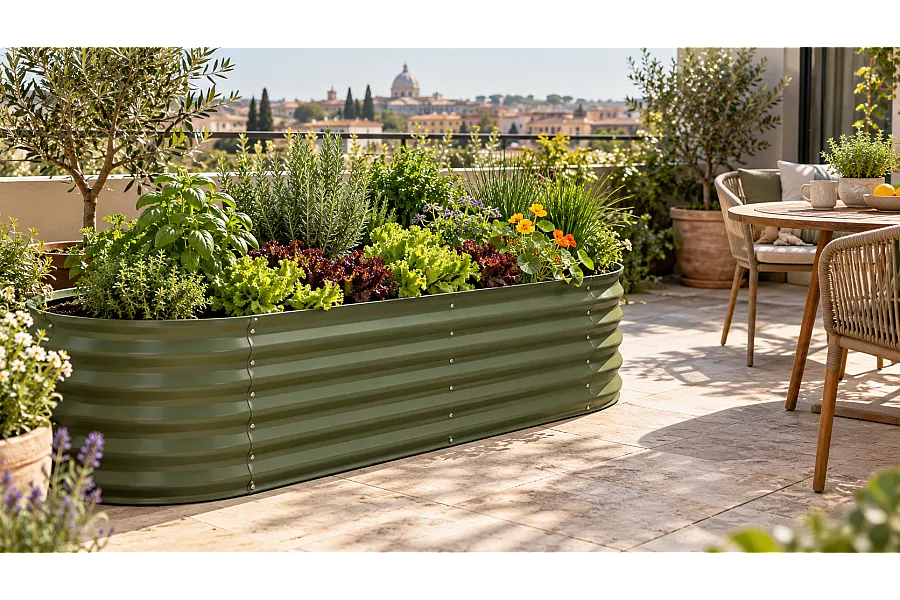
A raised garden bed gives a balcony, terrace or garden corner a clear purpose: a compact growing area that is easy to reach, easy to organise and simple to adapt as the season changes. Rather than spreading pots across every available surface, you can gather herbs, leafy greens, edible flowers or seasonal vegetables in one considered zone.
Choose the growing area before choosing the bed
The most successful purchase starts with the spot, not the product photo. On a balcony, the key questions are daylight, circulation and how close the bed sits to the wall, railing and watering point. On a terrace, leave a comfortable route around the bed so daily harvesting and care do not become a chore. In a garden, a raised bed works best when it is positioned near the path you already use, rather than at the far edge of the plot.
Think about what you want to grow during the first season. Herbs and salad leaves reward a smaller, accessible planting area. A mixed kitchen garden needs room for taller plants, succession sowing and a clean edge between planting and social space. Matching the bed to that routine makes the result feel intentional instead of temporary.
Balcony and terrace use: keep access practical
For compact outdoor spaces, reach matters as much as footprint. Place the long side where you can work from the open side without leaning over furniture or blocking a door. A bed near the kitchen can make everyday picking more realistic; a bed at the brightest end of a terrace may suit sun-loving plants better. Both choices can work when the position is planned around how the space is actually used.
| Use area | Plan around | Good first crops |
|---|---|---|
| Balcony | Sun, clear passage and watering access | Herbs, rocket, lettuce, strawberries |
| Terrace | Seating layout, wind exposure and a daily route | Herbs, flowers, peppers, leafy greens |
| Garden | Path connection, planting sequence and harvest access | Vegetables, companion planting and seasonal colour |
Garden placement: turn one corner into a productive zone
A raised bed can create structure in a garden without making the whole area feel formal. Use it to define the transition between lawn and planting, frame a patio edge, or gather a vegetable patch into a tidy working area. When more than one bed is used, leave enough space to walk, carry soil and harvest without stepping into the planting area.
There is also a visual advantage to a deliberate planting zone. Repeated foliage, a few flowering plants and a consistent edge make the space read as part of the landscape. The bed becomes more than a container: it gives the garden a centre of activity through the season.
Select the size from your maintenance routine
- Start with the plants you will genuinely grow. A modest herb and salad plan needs less area than a vegetable-focused seasonal bed.
- Keep every planted section reachable. Easy access encourages regular pruning, harvesting and replanting.
- Protect the route around it. Do not trade away the pathway that makes the balcony, terrace or garden comfortable.
- Plan soil and watering as part of the purchase. A growing area performs best when these everyday tasks are already considered.
Build a growing space you will use every week
The right raised bed is the one that fits your available space and makes planting feel inviting on an ordinary weekday. Once the location, access and crop plan align, it is easier to keep the area productive and visually coherent from the first seedlings to the last harvest. Explore raised garden bed options to choose a model that suits your balcony, terrace or garden layout.